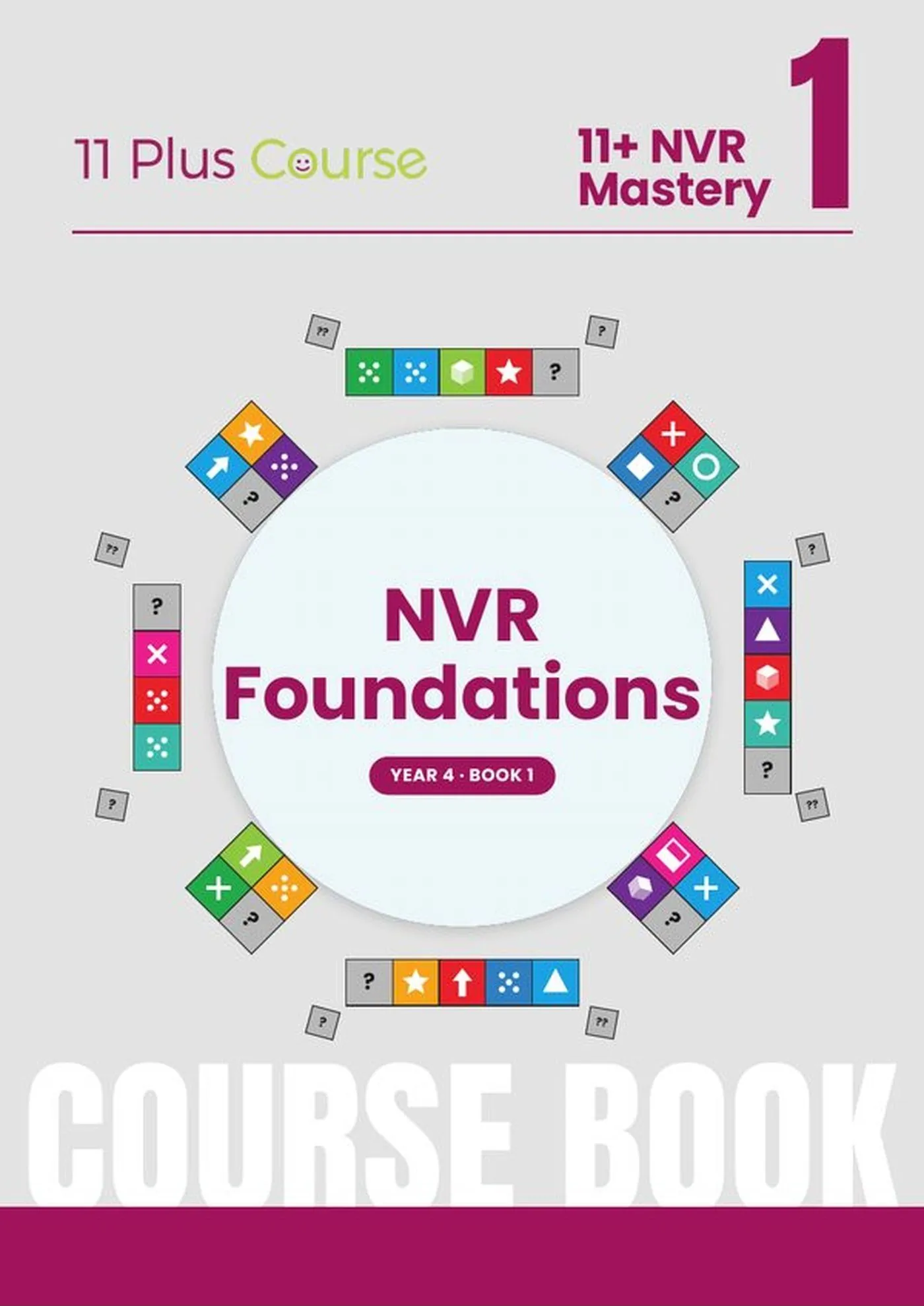
 Click to enlarge
NVR Foundations
The first meeting with series, odd one out and analogies.
- 12 tests of 40 questions in every book, in two sections of 20
- No more than 20 questions of one type in a week, so each type is learned properly
- Built for three passes: two timed attempts on the progress chart, then a cold third pass before the exam
- Full answer key
Want the whole series? The full Non-Verbal Reasoning series is £197, under £20 a book.
How this book is used in our course
Each test is sat under the clock: two sections of 20 questions. Mark, record, and go back over every wrong answer with the child explaining the rule they missed. The book is built for three passes: the second attempt weeks later proves the rule stuck rather than the answer being remembered, and a cold third pass before the exam proves it is still there.
Where it sits in the series
- This is the first book in the series.
- Next book in the series: Book 2, Shapes & Patterns
What's inside NVR Mastery 1
Five real pages from the book, so you can see exactly what your child will work from. All 10 sample pages are in the viewer.
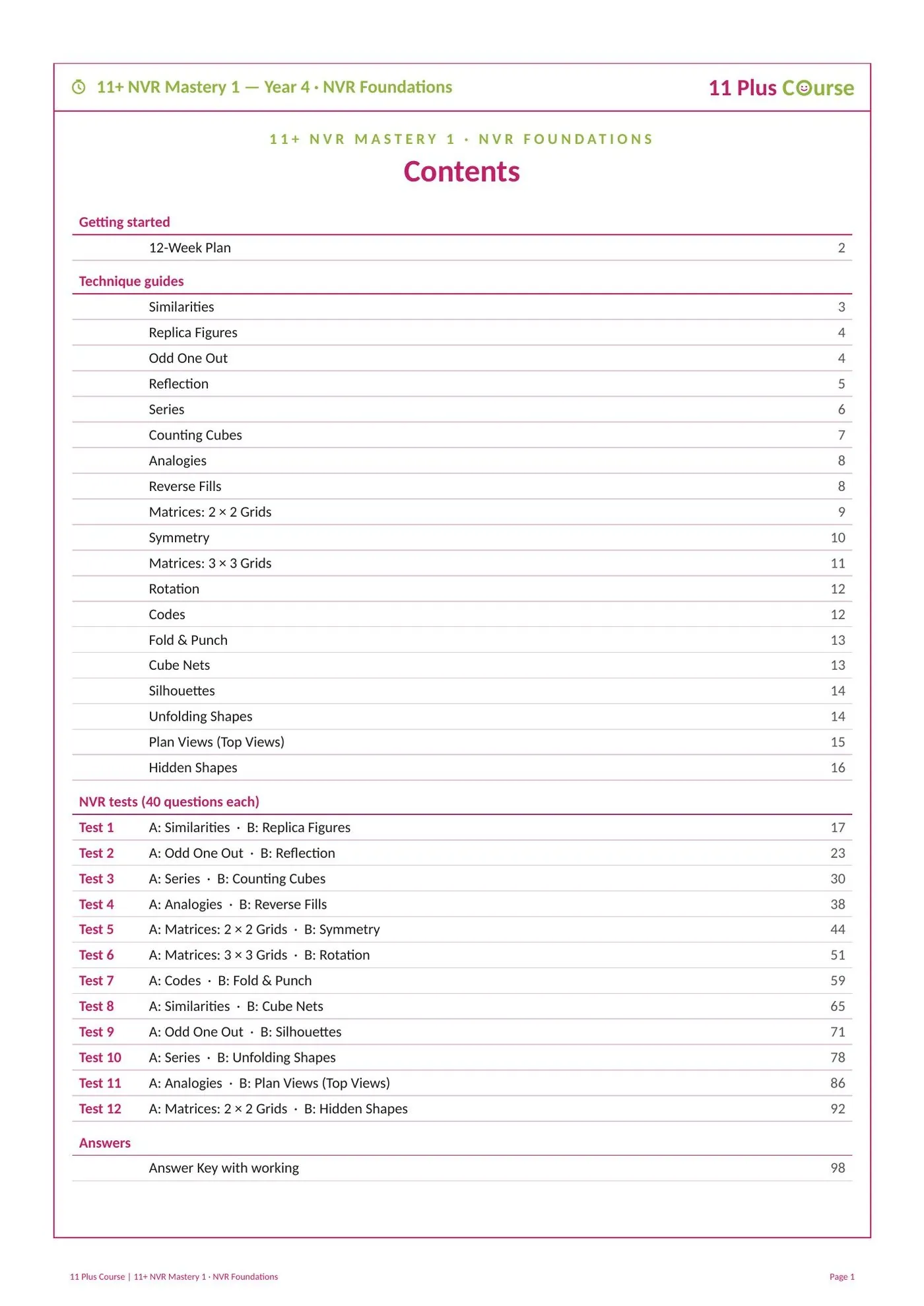
Every question type the 11+ sets, met once in Year 4 Term 1, with a technique guide for each.
Similarities, odd one out, series, analogies, matrices, codes, reflection, rotation, symmetry, counting cubes, fold and punch, cube nets, silhouettes, plan views, hidden shapes. Then twelve 40-question tests, each pairing a GL core type with a shape or 3D type, so by the end of the term a child has seen the whole of NVR and has a method for each part of it.
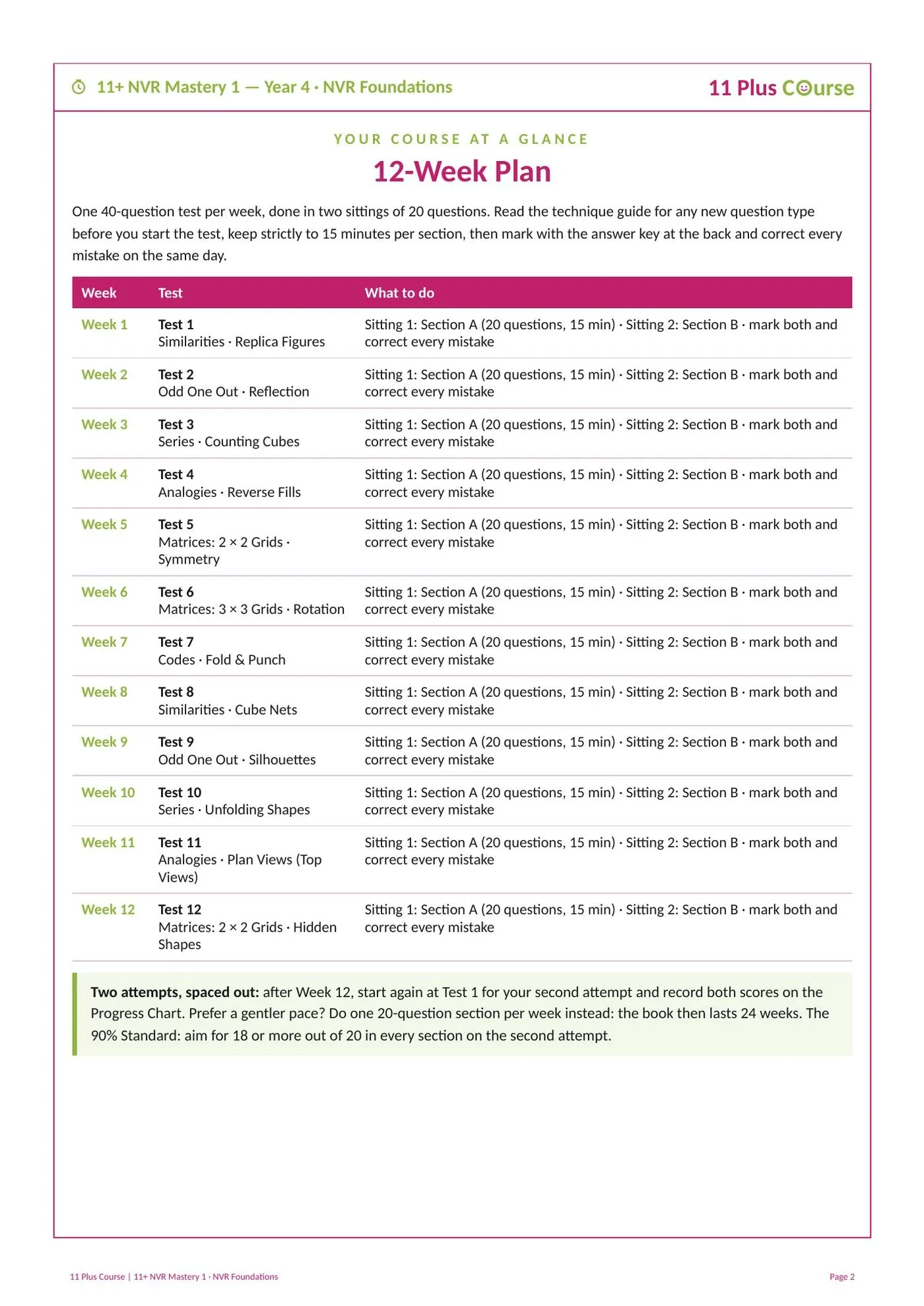
One test a week, two sittings of 20 questions, fifteen minutes each, mistakes corrected the same day.
The plan removes the guesswork for a parent: read the technique guide for any new type, sit Section A, sit Section B, mark with the answers at the back, correct every mistake that day. Twelve weeks, one term, and the habit of timed, marked, corrected practice is in place from the start.
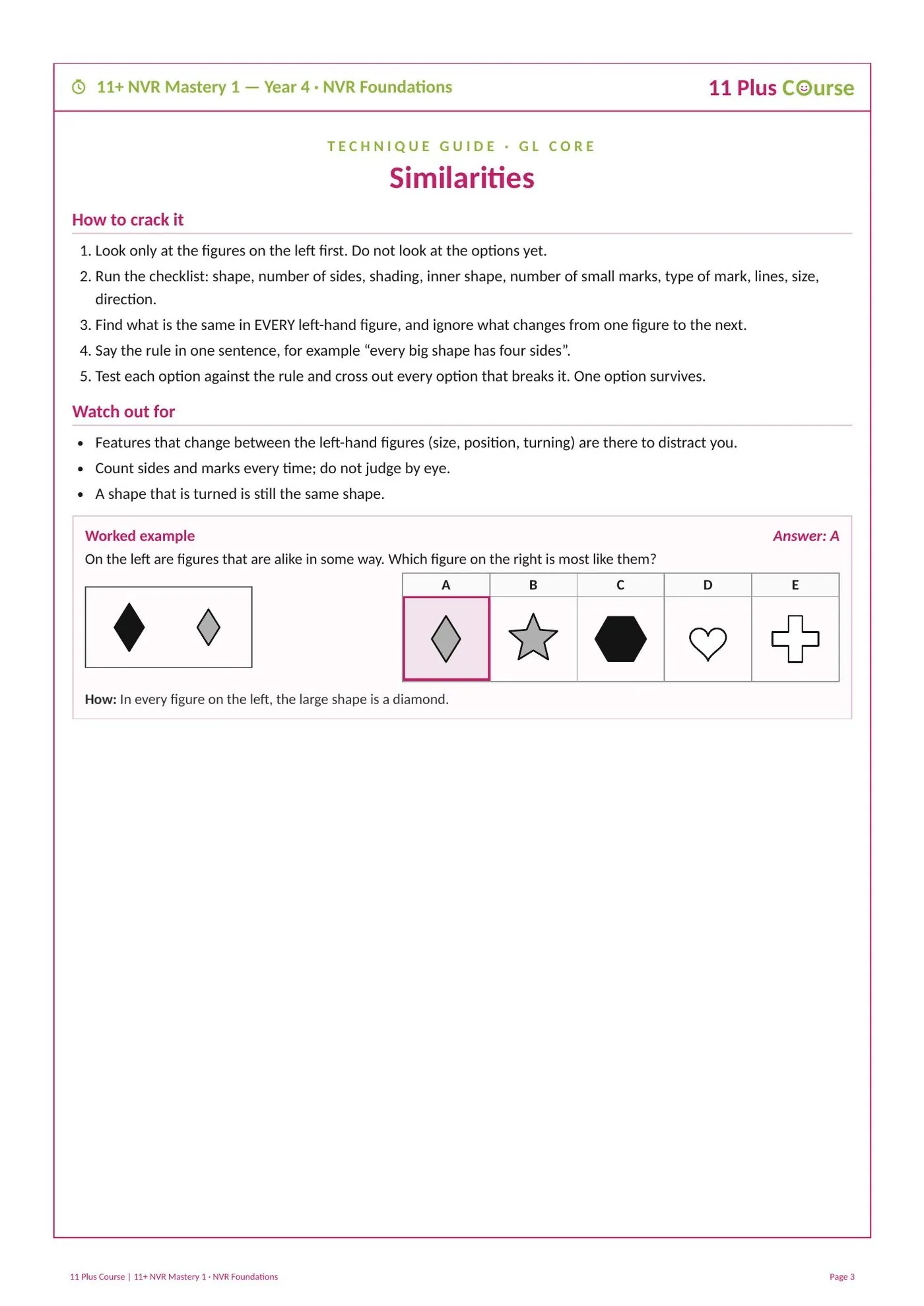
Look only at the left-hand figures first, run the checklist, say the rule in one sentence.
Shape, number of sides, shading, inner shape, number of small marks, type of mark, lines, size, direction. Find what is the same in every figure and ignore what changes. Then test each option against the rule and cross out every one that breaks it. The Watch-out box names the trap: features that change between figures are there to distract, and a shape that is turned is still the same shape.
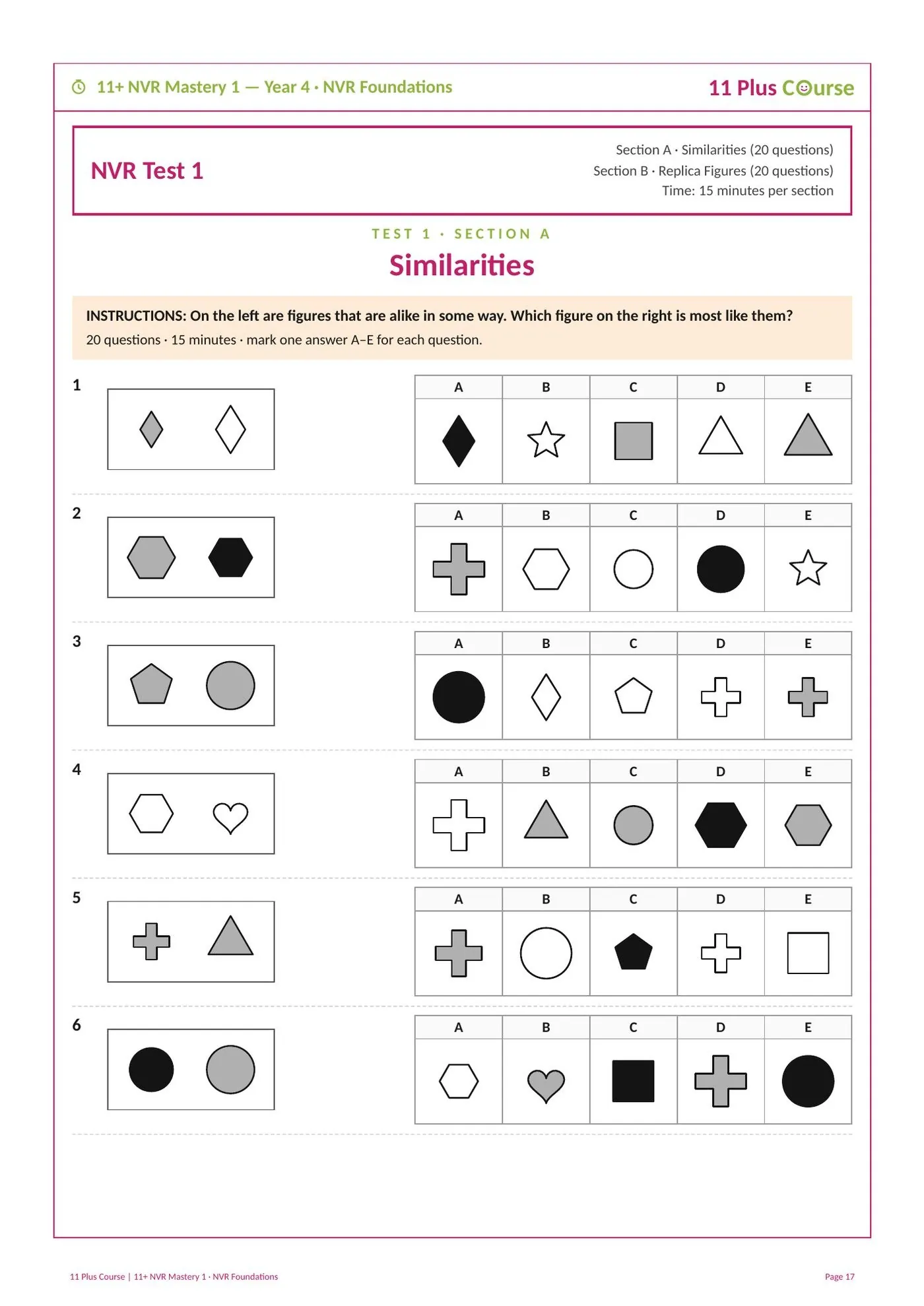
Twenty questions in fifteen minutes, five options, the GL layout.
Every test is set out the way the exam sets it: the instruction in the GL wording, the figures on the left, options A to E, and the time printed at the top. A child who has sat twelve of these in Year 4 walks into the real paper knowing what every page will look like.
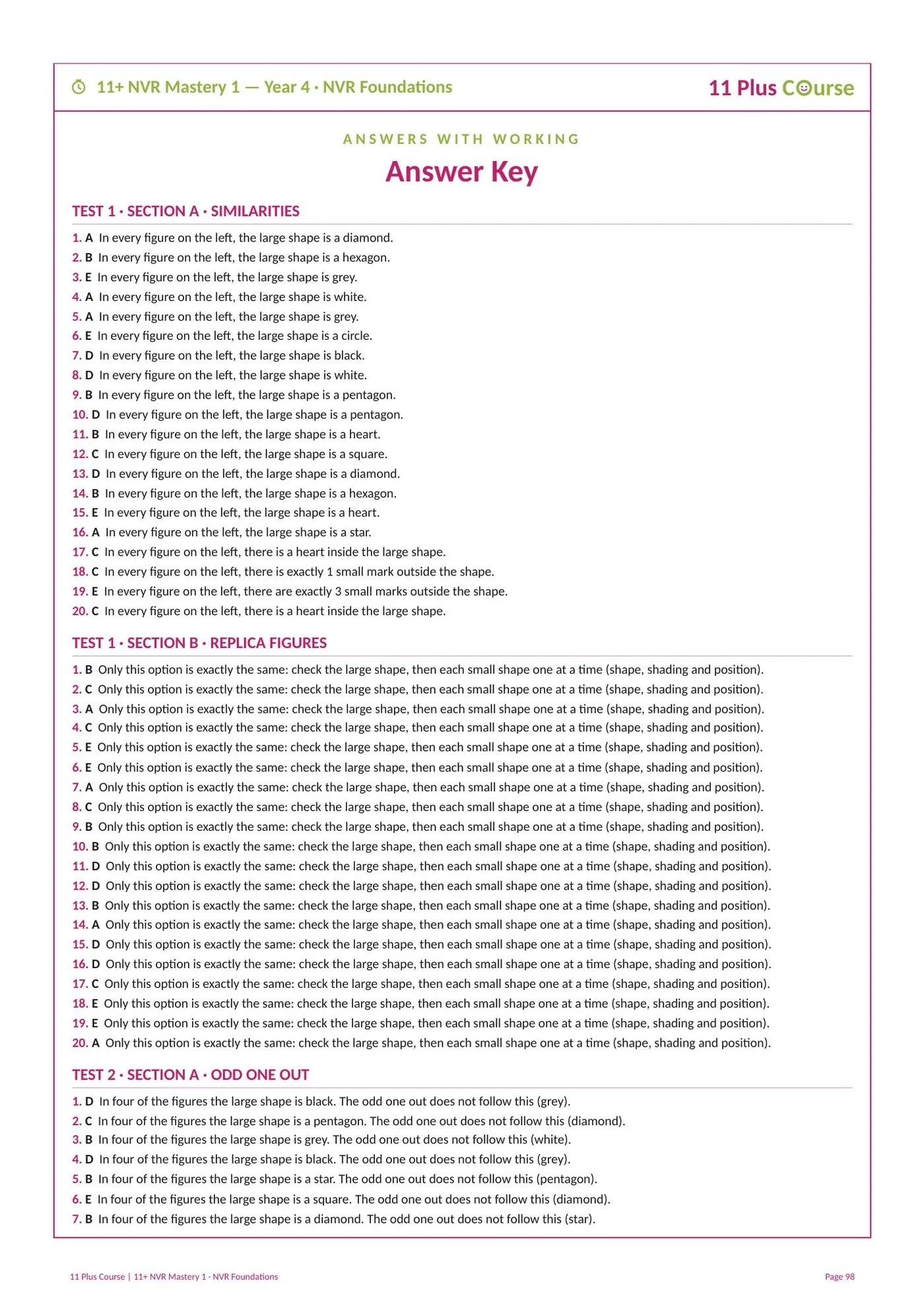
Every answer gives the rule, not just the letter.
"1. A: In every figure on the left, the large shape is a diamond." "3. E: In every figure on the left, the large shape is grey." A parent who has never done NVR can see why the answer is right, and a child who got it wrong learns the rule they missed. That is the difference between marking and teaching.
All 12 tests in the book follow the pattern shown here.
Other Year 4 books in NVR Mastery

Shapes & Patterns
Rotation, reflection, shading and the patterns behind them.

Codes, Grids & 3D Basics
Shape codes, matrices and the first 3D questions.

Spatial Reasoning
Nets, cubes, views and folding.

Year 4 Test Book
12 mixed tests of everything in Books 1–4.