 Click to enlarge
SHAMPOOP Plus Literary Devices Handbook
The eight devices every 11+ writer needs, with hundreds of examples and scholarship upgrades, then the devices that reach GCSE.
- The eight SHAMPOOP devices, each with a definition, its effect and scholarship upgrades
- Hundreds of examples to learn to recognise each device
- The Plus devices, from the tricolon to GCSE techniques
- Show, don't tell, with before-and-after pairs
- A one-page quick reference and scholarship check
Want the whole series? The full Creative Writing series is £129, under £17 a book.
How this book is used in our course
Learn one device a week: read the definition and effect, spot it in the examples, then take a familiar example and write the scholarship upgrade. Use the quick reference to run the scholarship check on every finished piece. In comprehension, the same list is how a child names the device a question is asking about.
Where it sits in the series
- Previous book in the series: Book 5, 6-Minute Drills
- Next book in the series: Book 7, The 11+ Question Types Guide: English Comprehension
What's inside Creative Writing Mastery 6
Four real pages from the book, so you can see exactly what your child will work from. All 8 sample pages are in the viewer.
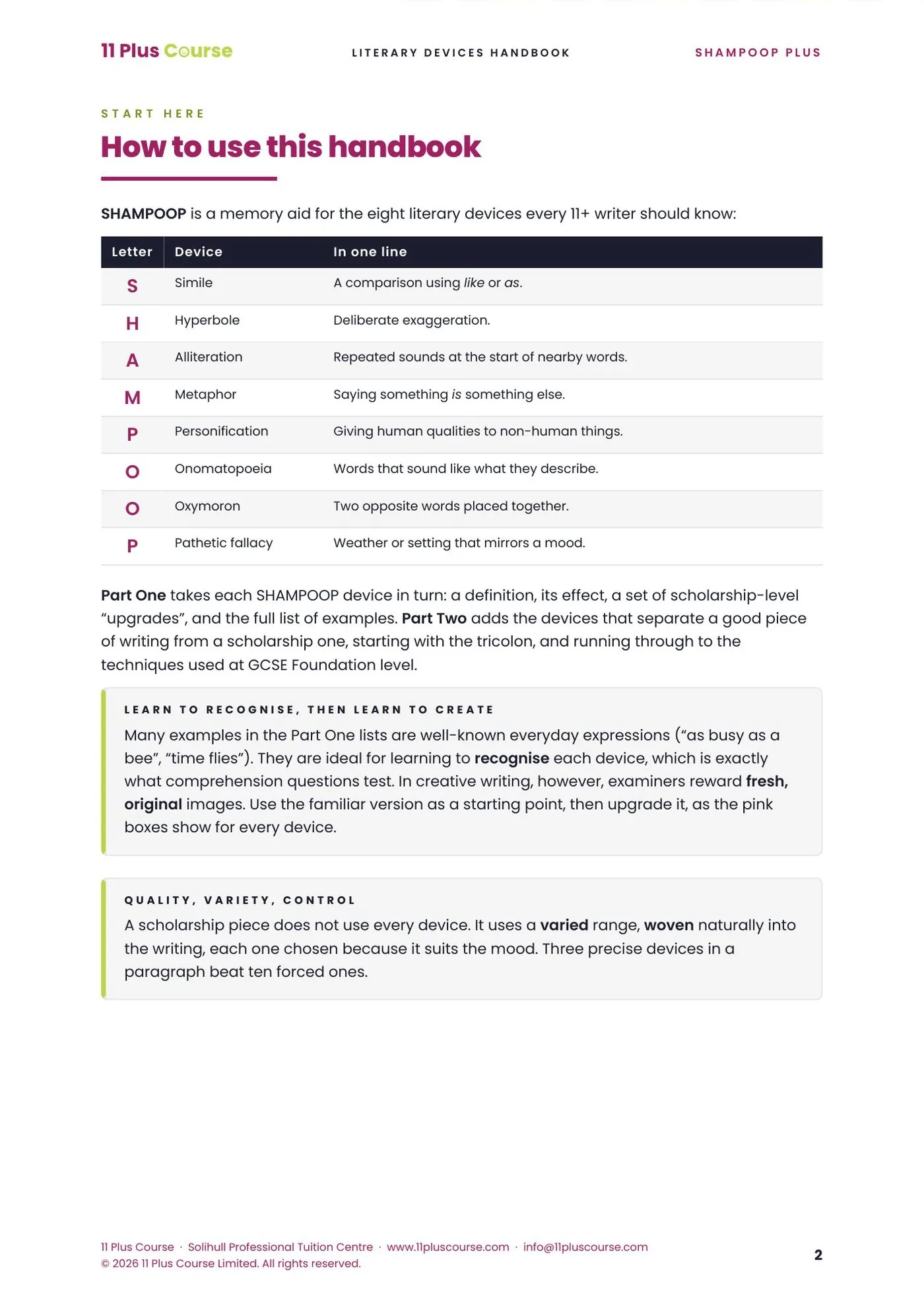
Eight devices every 11+ writer should know, in one word they will not forget.
Simile, Hyperbole, Alliteration, Metaphor, Personification, Onomatopoeia, Oxymoron, Pathetic fallacy. Part One takes each in turn: a definition, its effect, scholarship-level upgrades and the full list of examples. Part Two adds the devices that separate a good piece from a scholarship one, through to the techniques used at GCSE. Learn to recognise, which is what comprehension tests, then learn to create.
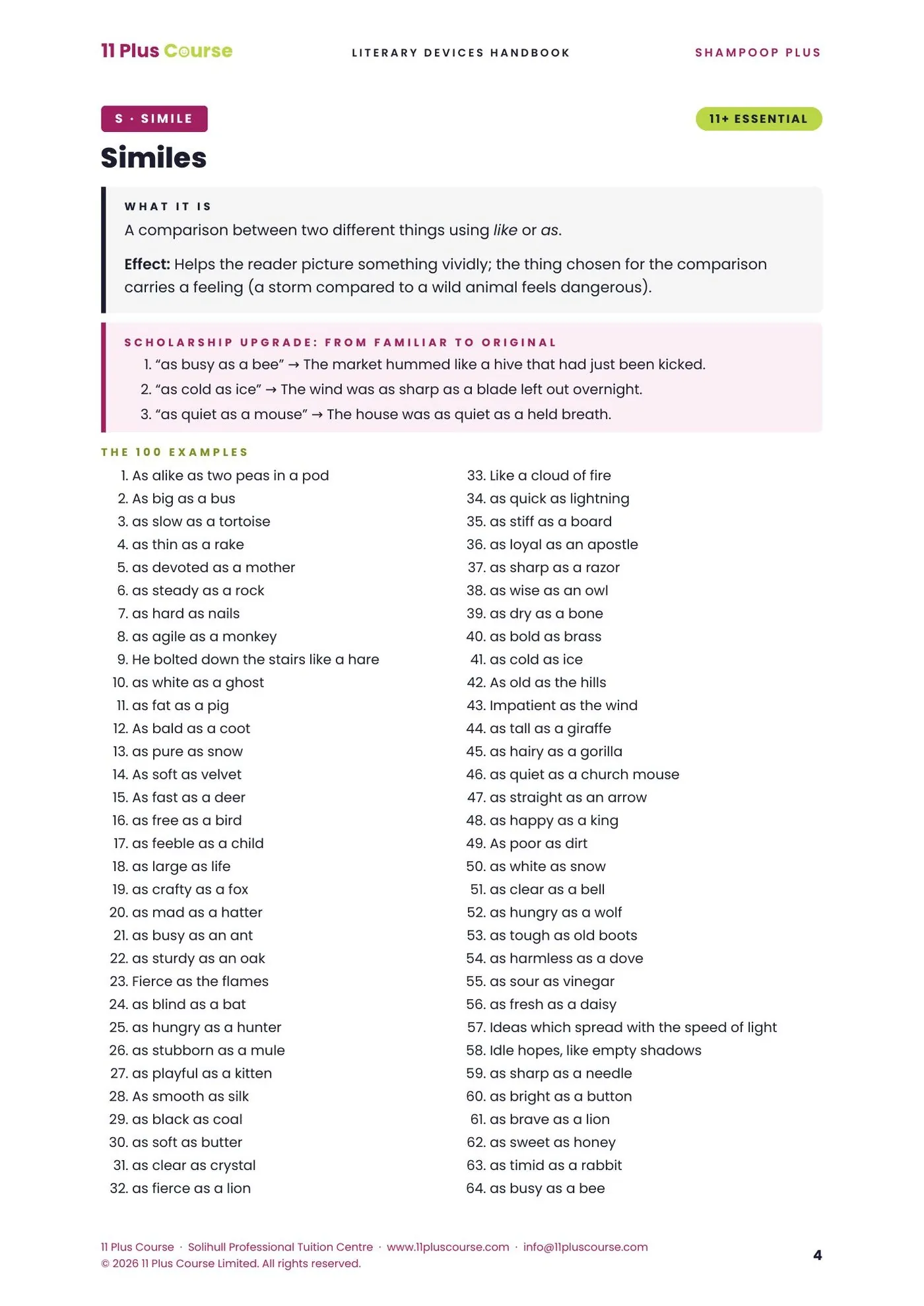
A hundred similes to recognise, and the upgrade that turns a cliché into an image.
"As busy as a bee" becomes "The market hummed like a hive that had just been kicked." "As quiet as a mouse" becomes "The house was as quiet as a held breath." The familiar version is where a child starts; the pink upgrade box is where examiners start giving marks.
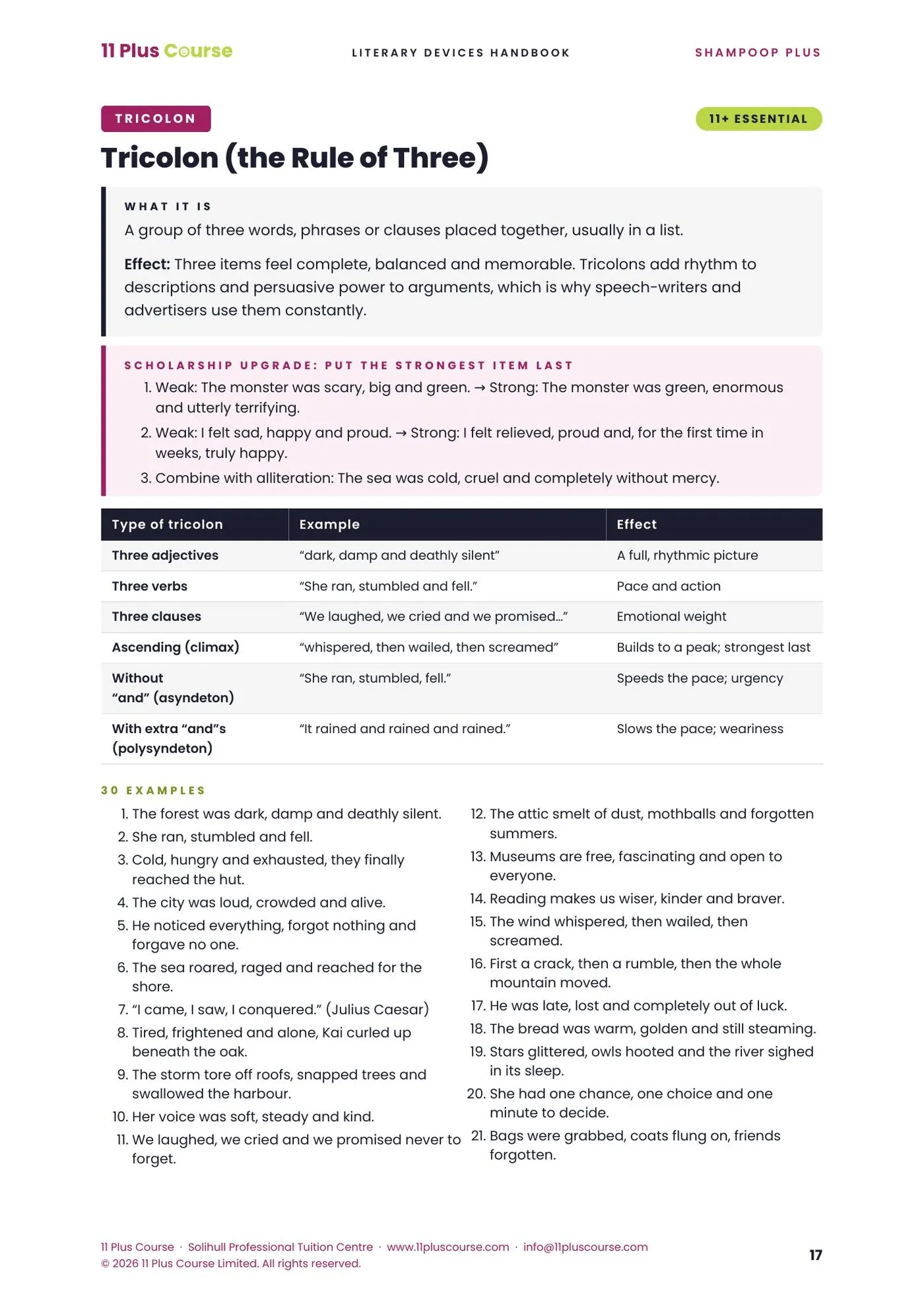
The rule of three, with the strongest item last.
"The monster was scary, big and green" becomes "The monster was green, enormous and utterly terrifying." Three items feel complete, balanced and memorable, which is why speech-writers and advertisers use them, and why they lift a description and a persuasive piece alike.
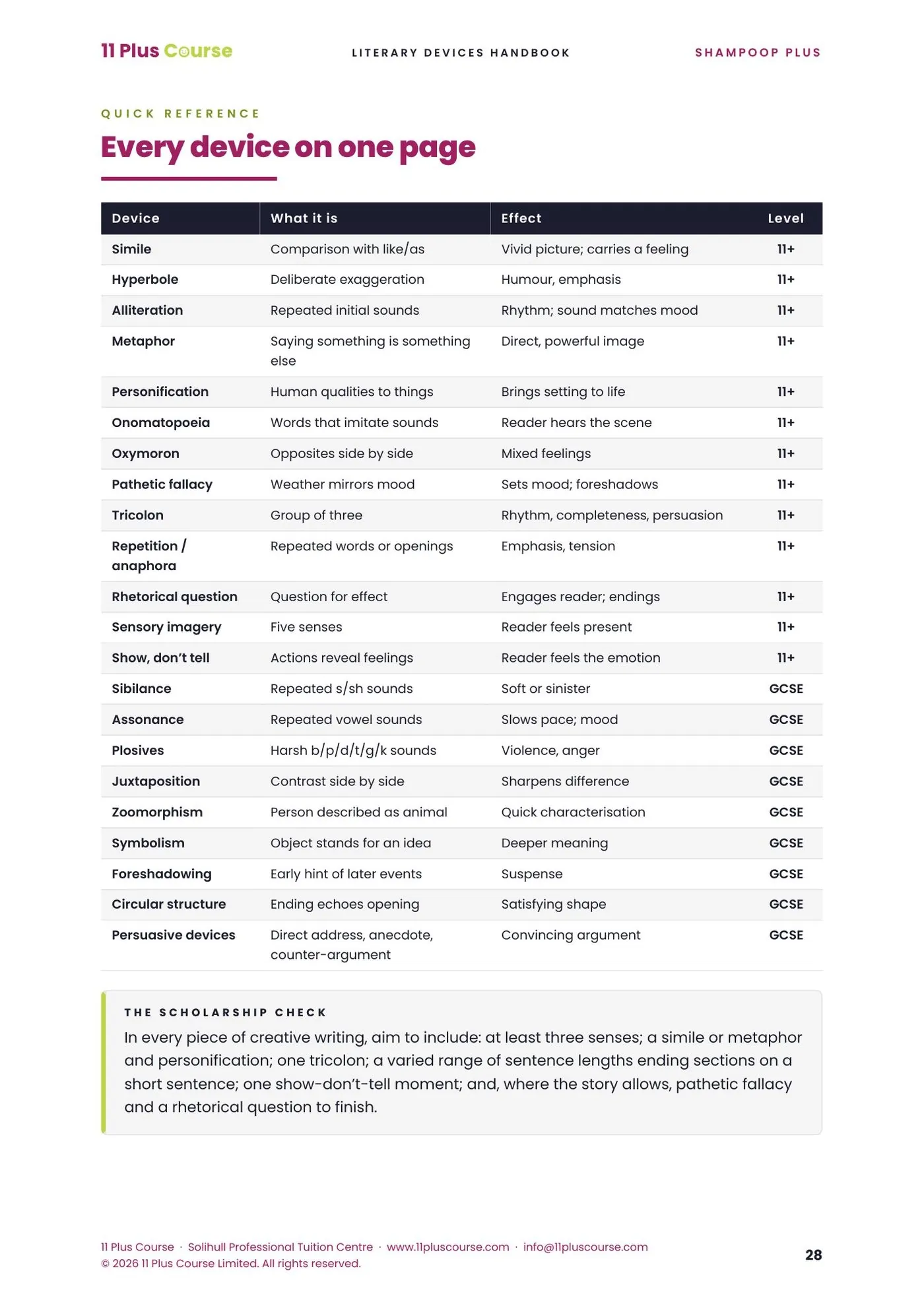
Every device on one page, and the scholarship check to run on every piece.
Twenty-two devices and techniques with what each is, its effect and its level, 11+ or GCSE. Then the check: at least three senses, a simile or metaphor and personification, one tricolon, varied sentence lengths ending on a short one, one show-don't-tell moment, and pathetic fallacy where the story allows. Three precise devices beat ten forced ones.
All 22 devices and techniques in the book follow the pattern shown here.
Other Year 4 & 5 books in Creative Writing Mastery

The Technique Booklet
The complete Writing Formula in more than 380 pages: plan in five minutes, write four paragraphs, check your own work, then every other kind of task.

Your Writing Toolkit
Every checklist, every mistake to avoid, the glossary and seven templates, open beside every piece of writing.

Settings & Characters
The scholarship groundwork: five annotated model settings, two bonus settings and five model characters, each with the blueprint behind it.

Settings & Characters: Model Descriptions
Ten short model paragraphs to read, learn and adapt: five settings and five characters.