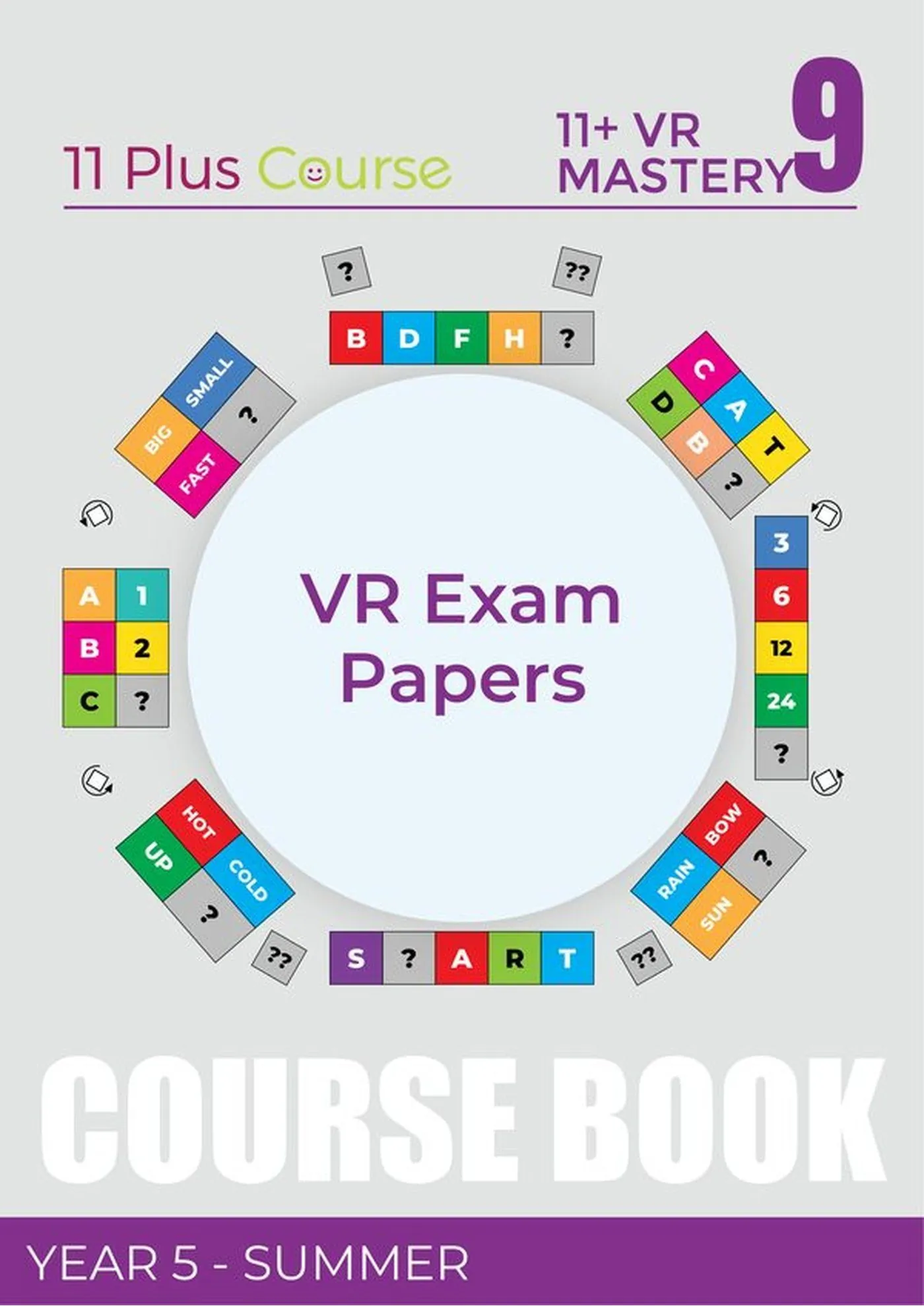
 Click to enlarge
VR Exam Papers
Eight full GL-style papers of 80 questions, each with its own answer sheet.
- 8 full GL-style papers of 80 questions, 50 minutes each
- A separate answer sheet with every paper
- An exam technique page for the answer sheet and timing
- Answer key with working and a progress chart with retest rule
Want the whole series? The full Verbal Reasoning series is £197, under £20 a book.
How this book is used in our course
One full paper a week in the eight weeks before the September exam, answered on the separate sheet in 50 minutes. Any paper below 85% is retested after its weakest types are revised from the technique guides.
Where it sits in the series
- Previous book in the series: Book 8, VR Vocabulary & Logic
- Next book in the series: Book 10, VR Exam Papers 2
What's inside VR Mastery 9
Four real pages from the book, so you can see exactly what your child will work from. All 10 sample pages are in the viewer.
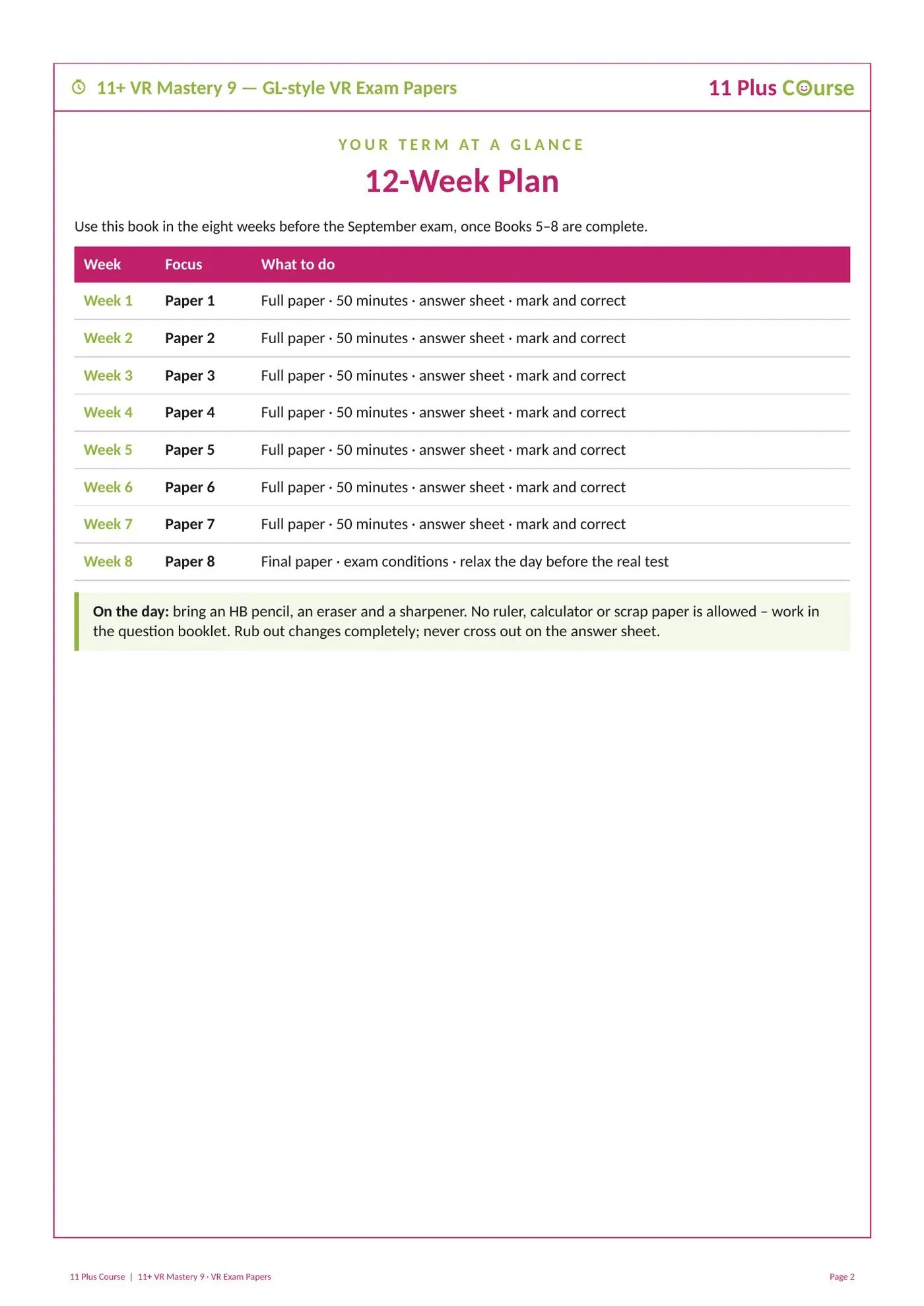
Eight full papers for the eight weeks before the September exam.
One a week, once Books 5 to 8 are complete. Each is a full 80-question paper in 50 minutes, answered on a separate answer sheet, then marked and corrected. Every paper below 85% gets a retest after its weakest types are revised.
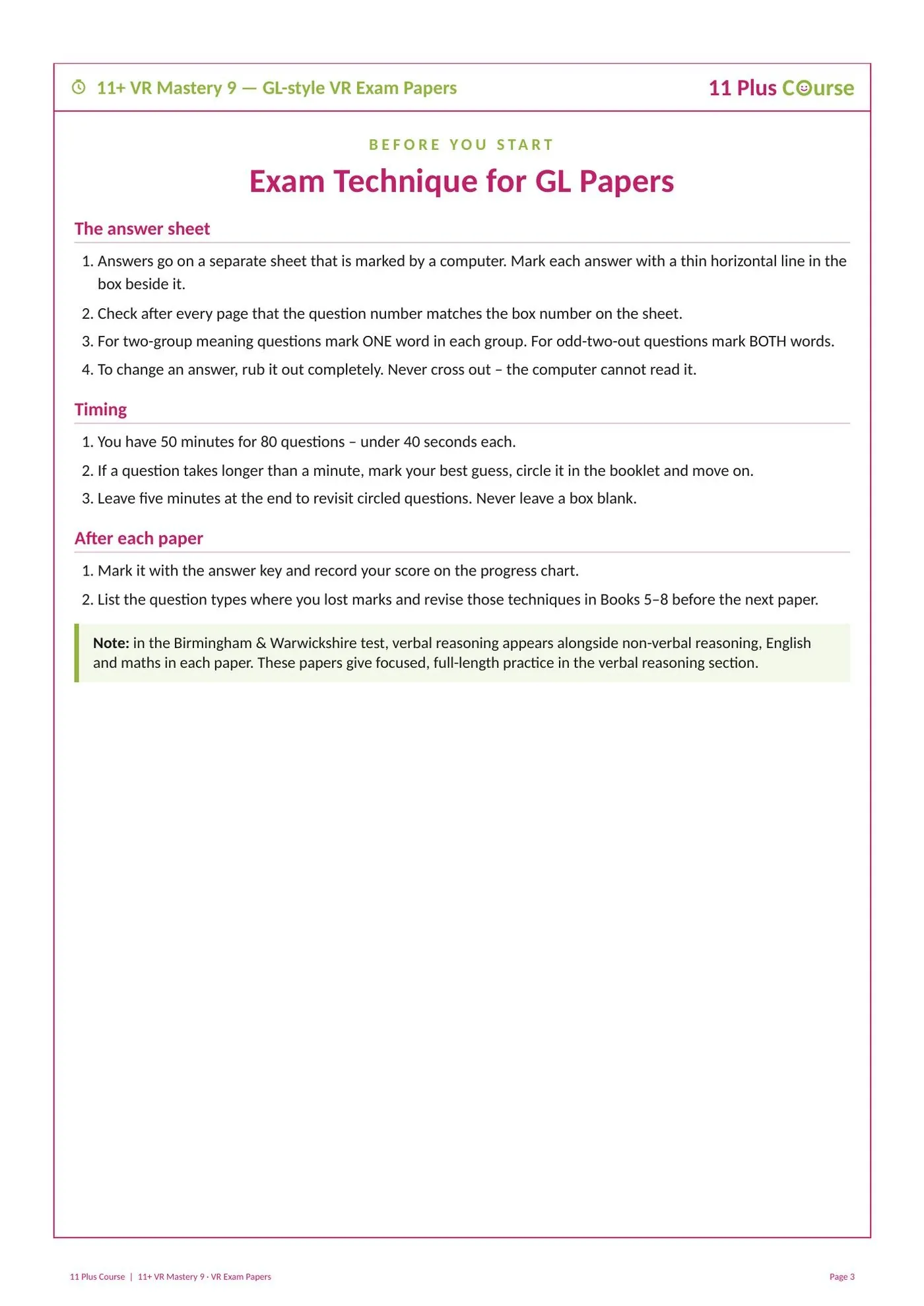
The answer-sheet rules that cost marks when nobody explains them.
A thin horizontal line in the box. Check the question number matches the box after every page. One word in each group for meaning questions, both words for odd two out. Rub out fully, never cross out, because a computer marks it. Under 40 seconds a question, and never leave a box blank.
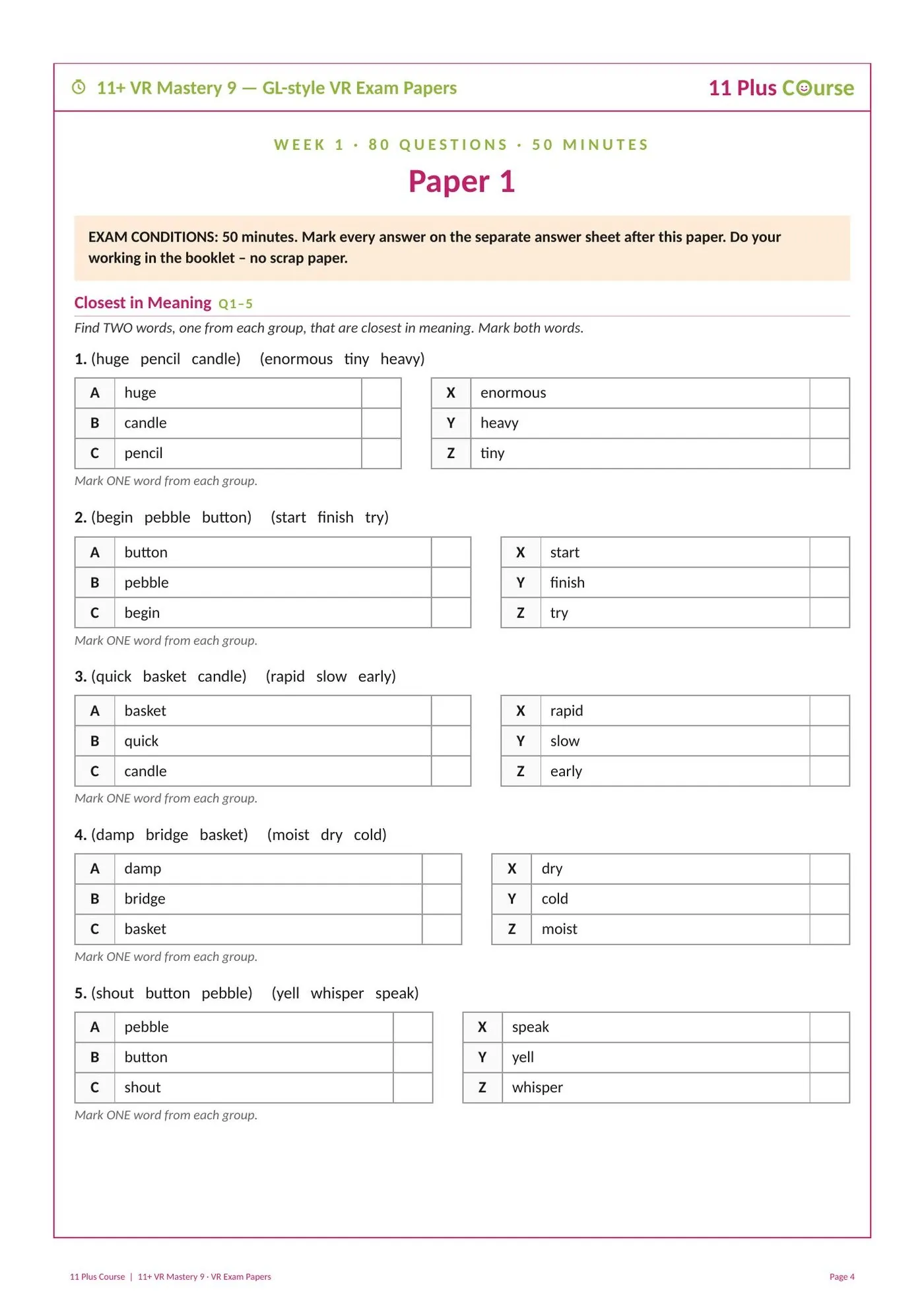
80 questions in 50 minutes, five per type.
Closest in meaning, letter codes, missing letters, number types and more, in the GL format with exam conditions printed at the top. Working goes in the booklet, answers go on the sheet, exactly as on the day.
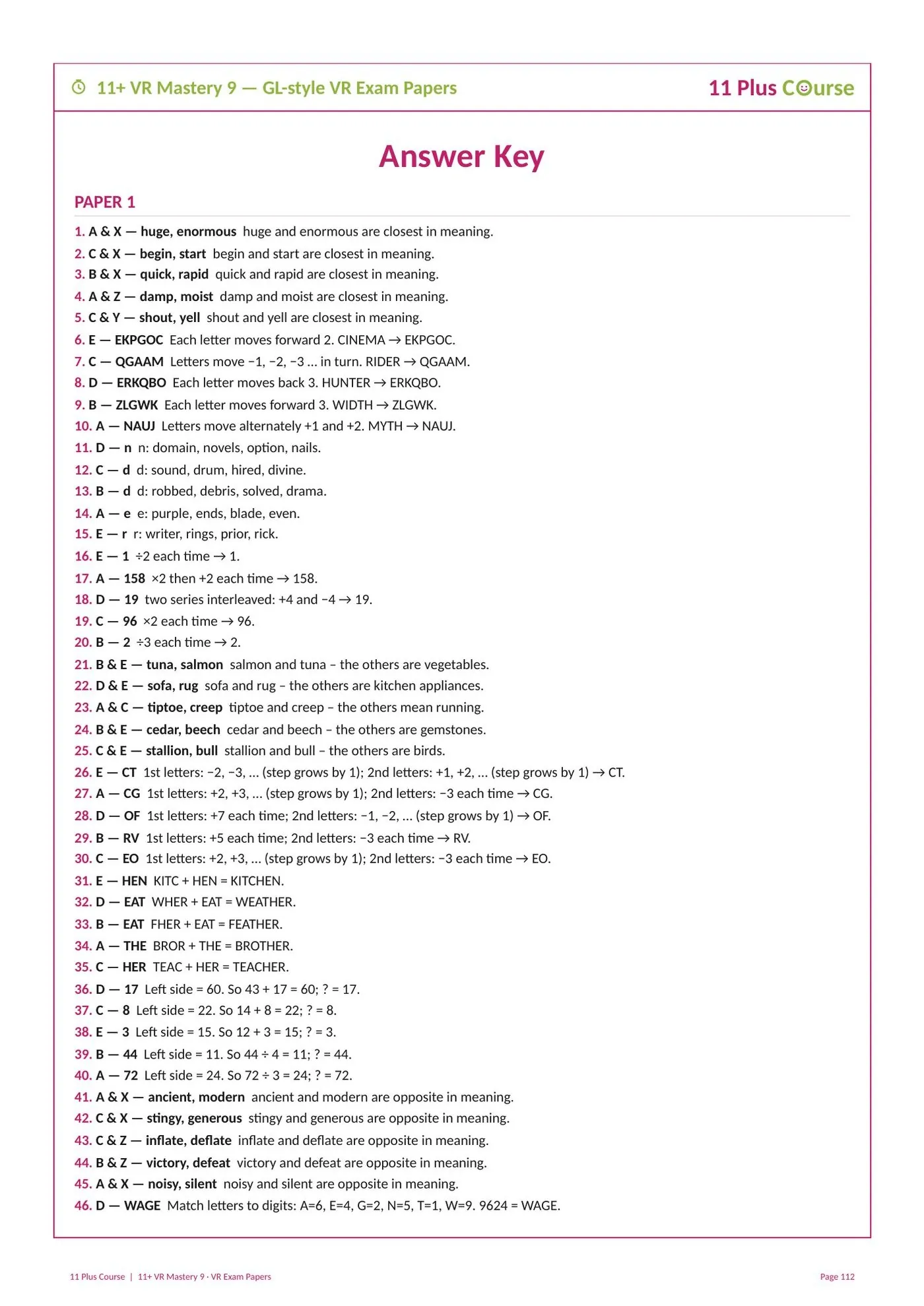
Every answer with its rule, so each paper becomes a revision list.
"Letters move −1, −2, −3 … in turn. RIDER → QGAAM." After each paper, list the types where marks were lost and revise those techniques before the next one.
All 8 papers in the book follow the pattern shown here.
Other Year 5 books in VR Mastery

VR Test Book
Timed mixed tests across every question type at Year 5 standard.

VR Codes & Numbers
The code and number types at full exam difficulty.

VR Vocabulary & Logic
The vocabulary and logic types most children find hardest.

VR Exam Papers 2
Eight more full papers of 80 questions, each with the new Word Grid section.