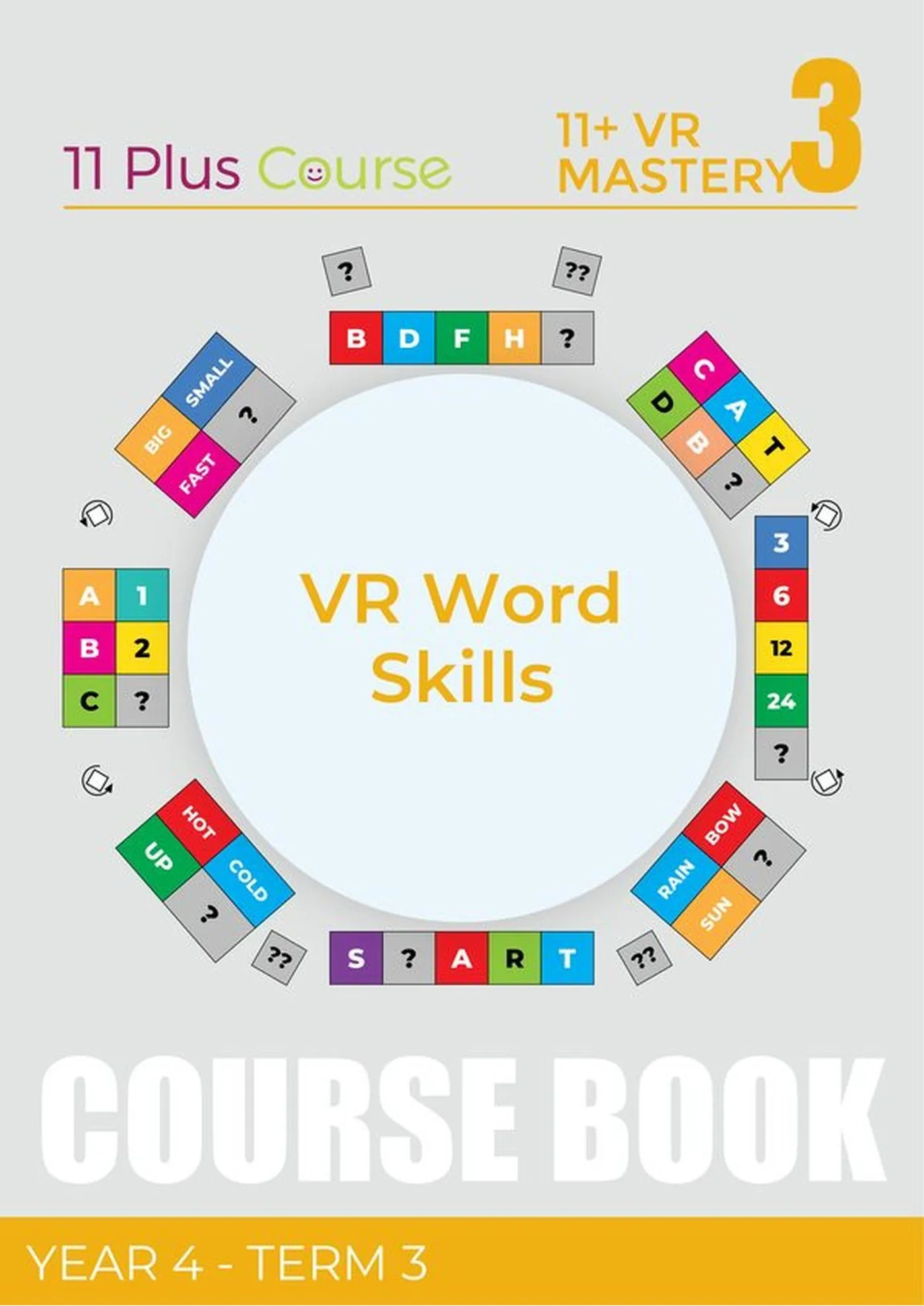
 Click to enlarge
VR Word Skills
18 word-based question types: meanings, hidden and compound words, anagrams, ladders and more.
- 18 word-based question types, two a week
- A technique guide for every type, with worked examples
- 30 laddered questions per type
- Two 36-question mixed tests
- Answer key with working, a progress chart and a 12-week plan
Want the whole series? The full Verbal Reasoning series is £197, under £20 a book.
How this book is used in our course
Two question types most weeks, four short sessions a week, learning the Vocabulary 2 words alongside. A guide and examples on day one, then sets of ten. Weeks 11 and 12 are two 36-question mixed tests.
Where it sits in the series
- Previous book in the series: Book 2, VR Codes & Sequences
- Next book in the series: Book 4, VR Foundations Test Book
What's inside VR Mastery 3
Four real pages from the book, so you can see exactly what your child will work from. All 10 sample pages are in the viewer.
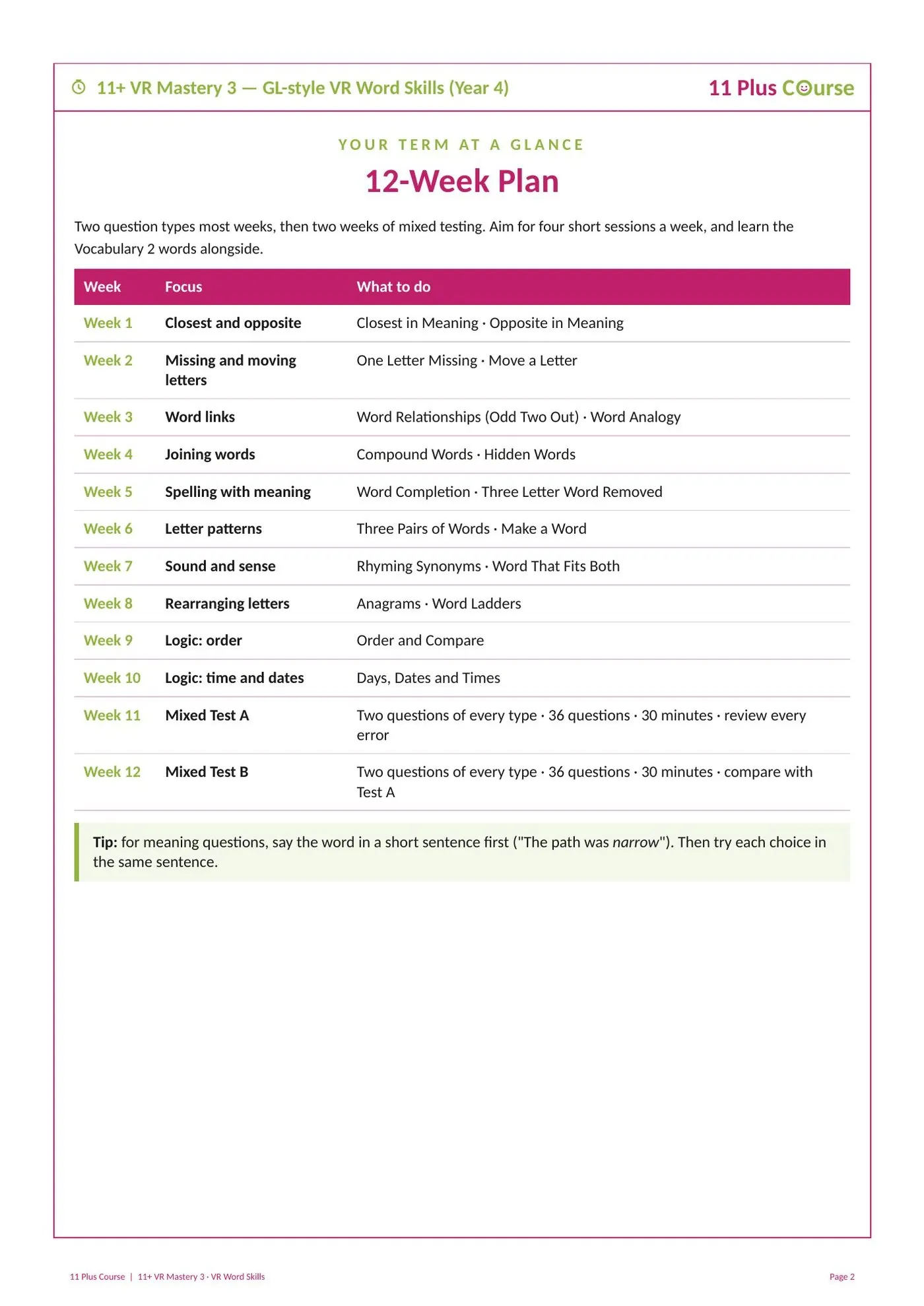
18 word-based question types in ten weeks, two at a time.
Closest and opposite meanings, missing and moving letters, odd two out and analogies, compound and hidden words, word completion, make a word, rhyming synonyms, anagrams, word ladders, then order-and-compare and days-and-dates logic. Four short sessions a week, learning the Vocabulary 2 words alongside, and two mixed tests to finish.
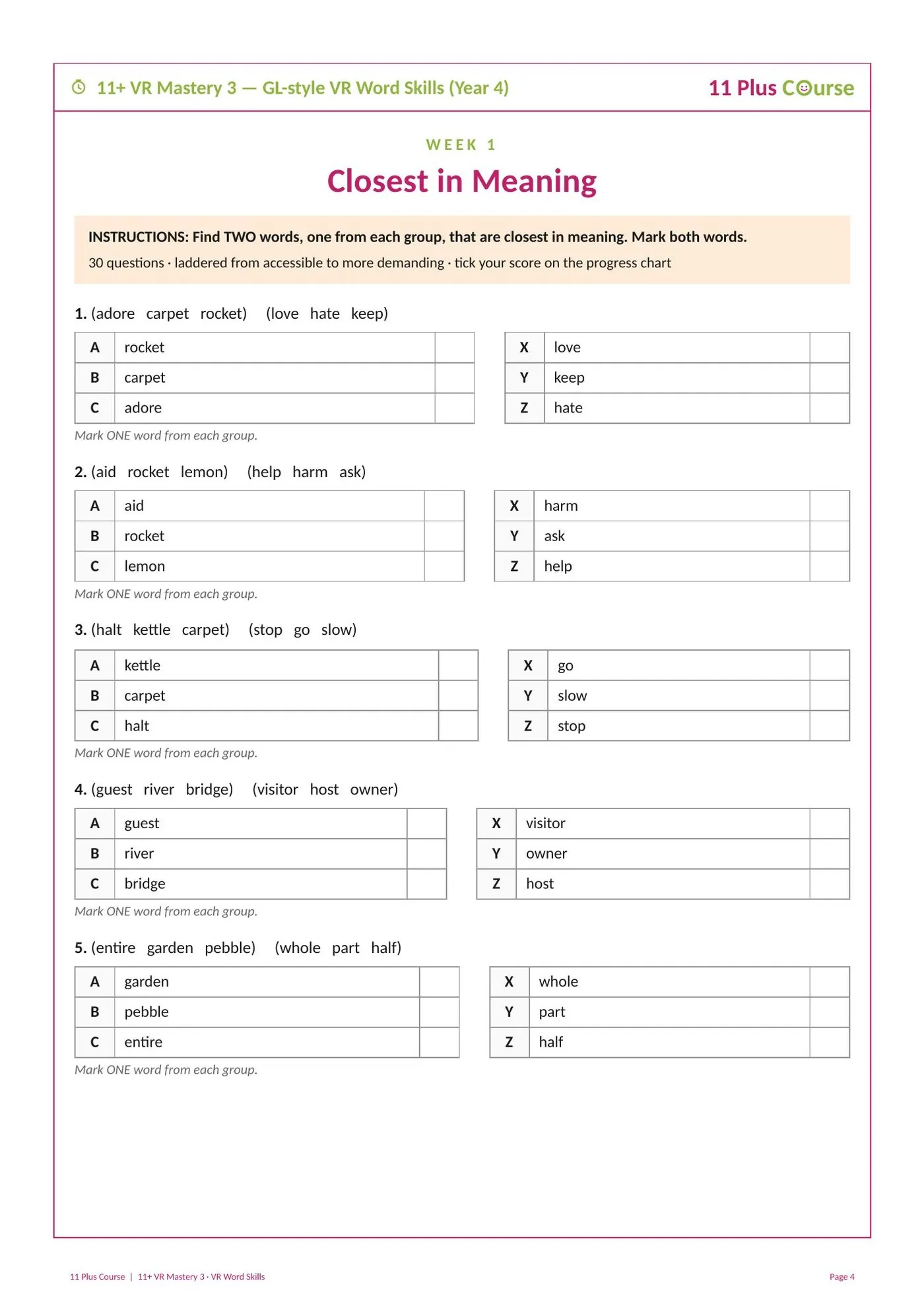
30 questions per type, starting easy so the method sticks.
(adore carpet rocket) (love hate keep). The first questions are deliberately clear so a child learns the routine: one word from each group, both marked. The ladder climbs from there to the words that really test vocabulary.
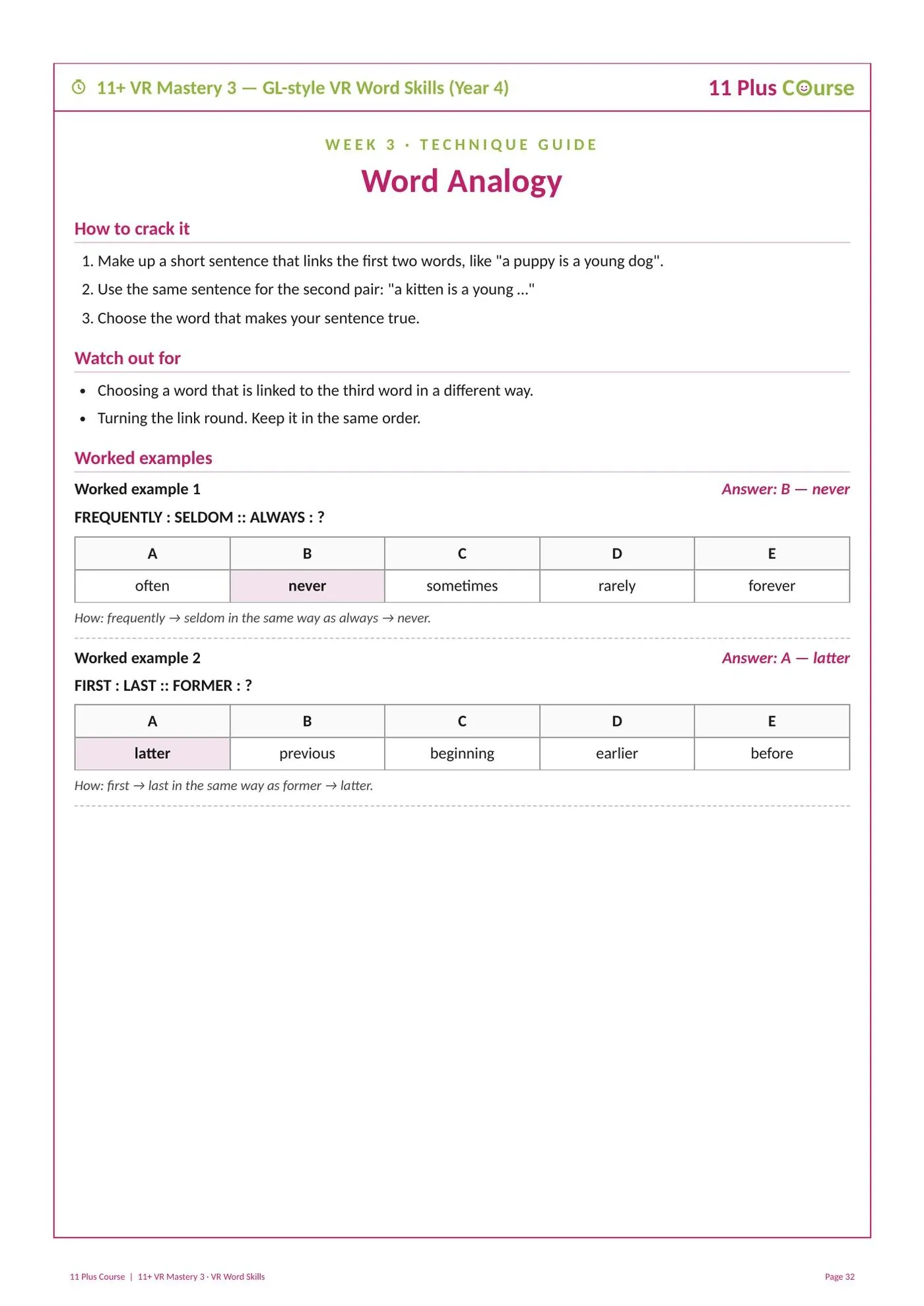
Make a sentence that links the first pair, then reuse it.
"A puppy is a young dog", so "a kitten is a young…". The guide shows why the sentence works: it stops a child choosing a word linked to the third word in a different way, and it keeps the link the right way round.
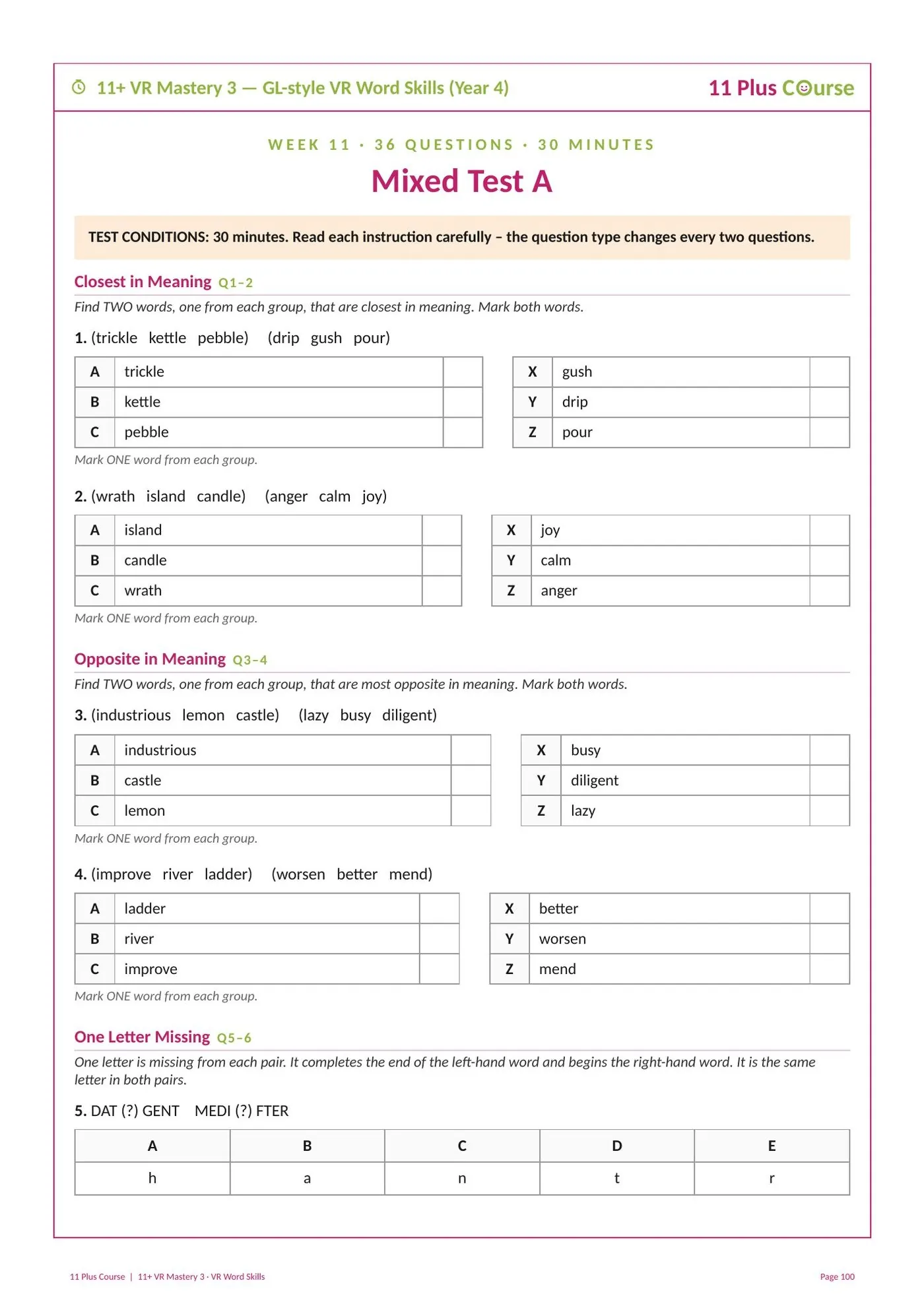
36 questions, 30 minutes, the type changing every two questions.
Two questions of every type in one sitting. It trains the skill the exam rewards most and children practise least: reading each new instruction instead of carrying on with the last one. Review every error, then sit Test B and compare.
All 18 question types in the book follow the pattern shown here.
Other Year 4 books in VR Mastery

VR Techniques Foundations
Every question type met once, gently, with vocabulary drawn from English Mastery Vocabulary 1.

VR Codes & Sequences
Letter codes, number codes, alphabet positions and sequences.

VR Foundations Test Book
12 mixed tests of everything in Books 1–3.

VR Foundations Test Book 2
12 more mixed tests, all new questions, done just before Year 5.